21 September 2026
General practitioners may experience an uptick in dementia enquiries from patients as a result of a campaign launched by the Australian Government Department of Health, Disability and Ageing (DHDA) to raise awareness about the condition.
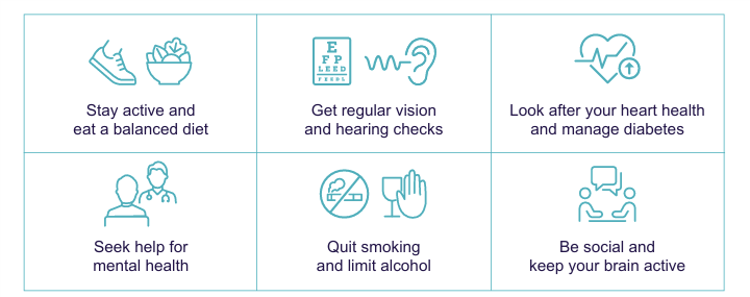
In August 2026 DHDA sent a letter to every Australian aged 50, urging them to think about brain health and to monitor six areas of physical, dietary and social activity which can reduce the risk of developing dementia in later years.
Eastern Melbourne PHN and North Western PHN have been running a campaign for the past three years to assist primary care responses to dementia. Resources and training materials available on the HealthPathways Melbourne website can help GPs improve the timeliness of dementia diagnosis, treatment and access to consumer support through the primary health care sector.
The move is important from individual and population-level perspectives. In Australia, dementia is the leading cause of death for women and the second leading cause for men, collectively accounting for around 10 per cent of total mortality.
Early and effective detection is thus crucial, as is understanding that nearly half of all dementia cases can be prevented or delayed through lifestyle choices.
On this page:
What’s behind the surge in general practice dementia enquiries?
The DHDA messaging to people aged 50 encourages recipients to visit the department’s dementia-related webpages and take a free risk assessment through an online survey called CogDrisk.
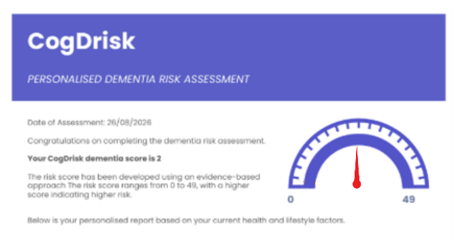
The survey, which was developed by Neuroscience Research Australia, asks participants to rank their habits and activities, including diet, activity, physical and mental health, reading habits and social connections.
It then produces an individualised, downloadable, dementia risk report card, giving a score between zero (which suggests a negligible risk of developing dementia) and 49 (which suggests a very high risk).
Recipients concerned about their results are encouraged to take their report card to their regular GP and have a discussion about ways to reduce the likelihood of developing the condition.
Access to CogDrisk isn’t restricted to people aged 50. As awareness grows it’s expected that people in other age cohorts will use it in greater numbers.
Resources for clinicians
HealthPathways Melbourne is the source of localised clinical and referral pathways for GPs and other primary health providers to use during consultations. The platform’s suite of dementia-related pathways has been updated to reflect best practice and to includes geographically appropriate services and supports.
There are several dedicated dementia-related pathways, including:
- Cognitive impairment and dementia
- Behavioural and psychological symptoms of dementia (BPSD)
- 5-minute neurological exam for patients with possible dementia
- Medications for dementia
- End stage dementia
- Non-acute geriatric referral (> 24 hours)
- Dementia support and resources
- Falls and balance services
- Home and community support for older adults
- Aged care community assessment
The platform also publishes open-access clinical case studies, including this one about approaches to diagnosing possible dementia.
HealthPathways Melbourne is a joint venture by North Western Melbourne Primary Health Network (NWMPHN) and Eastern Melbourne Primary Health Network (EMPHN). It is a free subscription service for clinicians working in the two catchment areas.
Learn more about dementia in general practice
Free education and training for health and aged care workers is available through Dementia Training Australia. A list of available courses can be found on the organisation’s homepage.
Of particular interest may be recordings of two webinars organised jointly by that organisation, EMPHN and NWMPHN:
- Demystifying Dementia – session 1: Recognising dementia in general practice (19 July 2023)
- Demystifying Dementia – session 2: Post-diagnostic care of dementia in general practice (2 August 2023)
- Managing Dementia – session 1: Driving assessments in dementia (16 July 2024)
- Managing Dementia – session 2: Medication management in dementia (22 August 2024).
To find a list of upcoming events in both regions, check out the NWMPHN events and EMPHN events pages.
Local dementia service directory and resources for patients
The HealthPathways Melbourne team has created a public-facing dementia directory – a searchable archive of clinical and non-clinical support services. It contains direct links to relevant government agencies and peak bodies endorsed by ADHA, including Dementia Australia and Dementia Support Australia.
The site also features explanatory information for people recently diagnosed with the condition, including information sheets in multiple languages. Visit dementiadirectory.org.au/recently-diagnosed
Find out more via our Dementia care pathways for health professionals webpage