27 May 2026
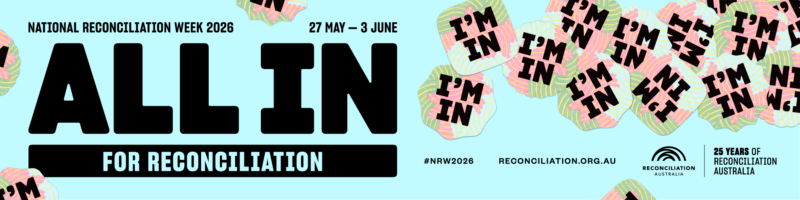
Today marks the beginning of National Reconciliation Week, a time for all of us to learn about our shared histories, cultures and achievements, and to reflect on how each of us can contribute to reconciliation.
This year’s theme, All In, reminds us that reconciliation is a shared responsibility. It belongs to all of us, every day, through how we work, listen, connect and take action.
In the theme artwork Gaagal, created by Bundjalung artist Otis Hope Carey, the ocean is used as a metaphor for people from all walks of life coming together, swirling, connecting and being all in for reconciliation.
General practice teams in the EMPHN catchment can acknowledge National Reconciliation Week in a number of ways.
How can your practice get involved?
Your practice could:
- Hold a National Reconciliation Week morning or afternoon tea for staff and patients.
- Display National Reconciliation Week posters and resources.
- Provide colouring sheets or activities for patients.
- Share information on your practice’s social media pages or website.
- Attend local National Reconciliation Week events in your area.
Useful information for health professionals
HealthPathways Melbourne provides clinicians with culturally safe and responsive care pathways for Aboriginal and Torres Strait Islander patients.
Explore key pathways:
- Aboriginal and Torres Strait Islander Services Directory
- Aboriginal Hospital Liaison Officers
- Closing the Gap (CTG) Pharmaceutical Benefits Scheme (PBS) Co-payment Program
- Cultural competency and cultural safety training
- Health Assessment for Aboriginal and Torres Strait Islander people (MBS Item 715)
- Improving health outcomes for Aboriginal and Torres Strait Islander people – initiatives and incentives
- Practice Incentives Program Indigenous Health Incentive (PIP-IHI)
- Principles of care provision for Aboriginal and Torres Strait Islander peoples
Commissioned services available in the catchment
EMPHN commissions services to support Aboriginal and Torres Strait Islander social and emotional wellbeing within the community.
These services include Oonah Belonging Place, Bubup Wilam Aboriginal and Family Centre and Holstep Health. Programs delivered by these services are grounded in Aboriginal communities’ knowledge of their own needs and how best to address them.
Cultural safety training
The Royal Australian College of General Practitioners has developed an online training module on cultural safety and awareness. The training is designed for GPs, general practice staff, medical students, primary healthcare staff and other healthcare providers.
Department of Health, Disability and Ageing useful links
The Department of Health, Disability and Ageing works in partnership with Aboriginal and Torres Strait Islander people to develop and implement strategies, programs and initiatives to improve health and wellbeing.